
Introduction
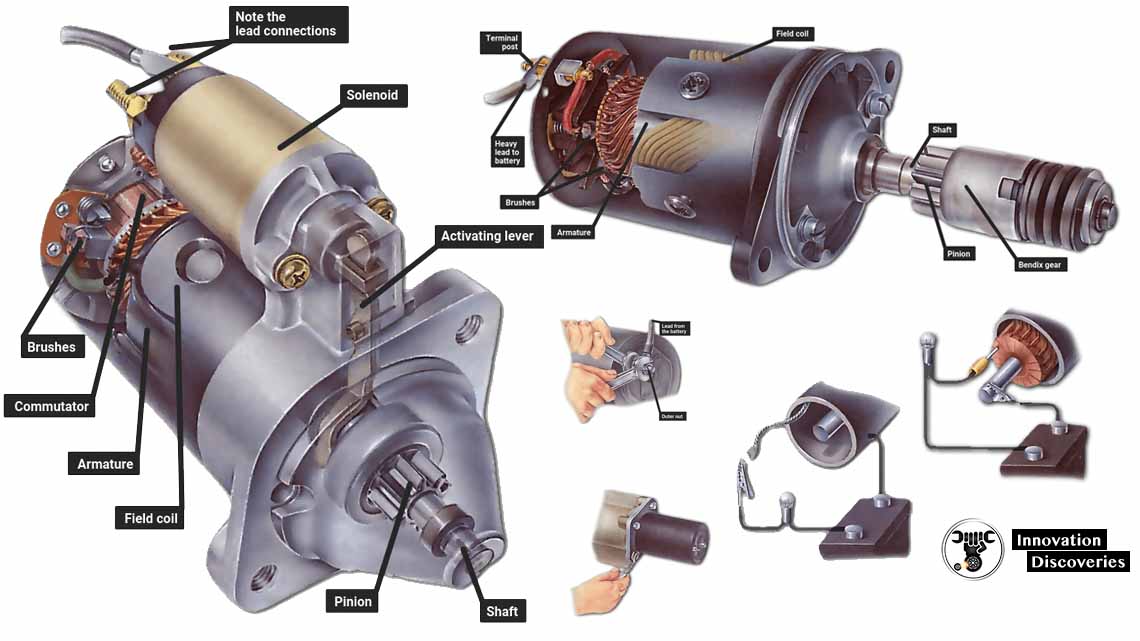
The starter motor is a critical component of an internal combustion engine, responsible for rotating the crankshaft during engine startup. As engine designs evolved—becoming more compact, higher in compression, and more efficient—the traditional direct-drive starter motor became insufficient in many applications. This led to the development of multiple starter motor configurations designed to deliver higher torque, improved efficiency, and better durability.
Among these designs, R type, RA type, GA type, and P & PA type starter motors represent distinct engineering approaches to torque transmission, gear reduction, and pinion engagement. Although these designations are widely known from Japanese starter motor catalogs, the mechanical principles are universal and used across the automotive industry.
Fundamentals of Starter Motor Operation
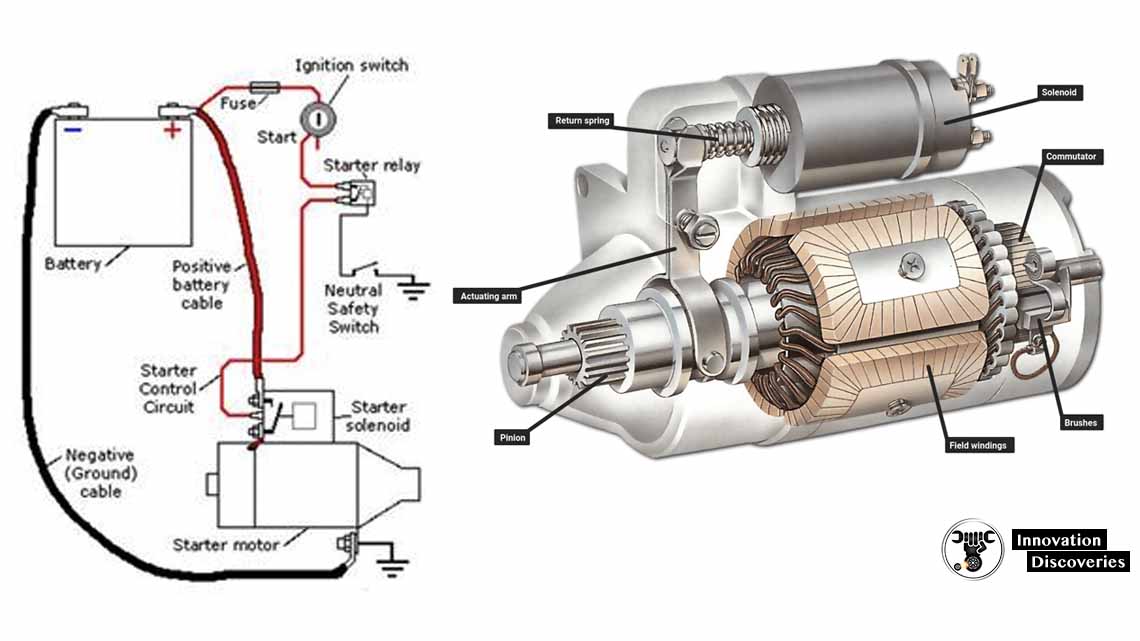
A starter motor converts electrical energy from the vehicle battery into mechanical torque. This torque is transmitted through a pinion gear, which meshes with the engine flywheel or flexplate ring gear to rotate the crankshaft.
During cranking, the starter motor must overcome:
➤ Engine compression resistance
➤ Internal friction of rotating components
➤ Viscous drag caused by engine oil, especially at low temperatures
To meet these demands efficiently, different starter motor designs employ gear reduction systems, pinion-shift mechanisms, or planetary gear arrangements.
GA Type Starter – Pinion Shift, Direct Drive Design
The GA type starter represents a direct-drive, pinion-shift design. In this configuration, there is no internal gear reduction between the motor and the pinion.

Construction
The GA type starter consists of:
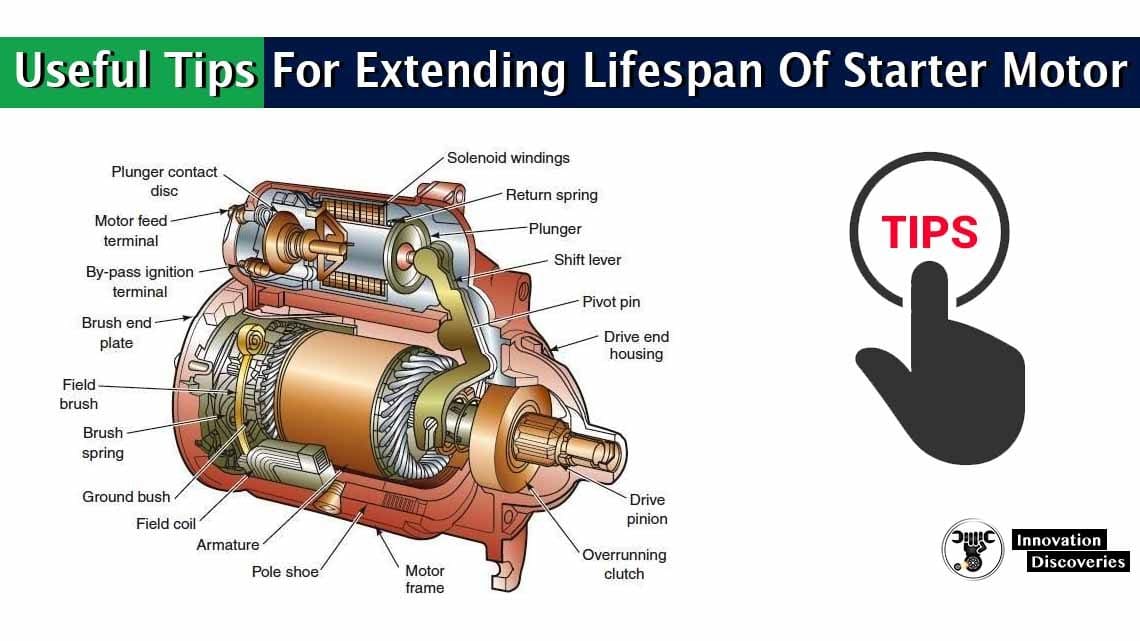
➤ A high-torque DC electric motor
➤ A solenoid-operated shift fork
➤ A direct-drive pinion gear
➤ An overrunning (one-way) clutch
Operating Principle
When the ignition switch is activated, the solenoid energizes and mechanically pushes the pinion gear forward to engage the flywheel ring gear. Once engaged, the motor directly drives the pinion at motor speed, transferring torque straight to the engine.
Engineering Characteristics
• Simple mechanical structure
• Fewer internal components
• High current consumption due to lack of gear reduction
• Larger and heavier motor to generate sufficient torque
Applications
GA type starters are commonly found in:
⤷ Older vehicle platforms
⤷ Low-compression petrol engines
⤷ Industrial or stationary engines
R Type Starter – Spur Gear Reduction Design
The R type starter introduces a gear reduction mechanism between the motor and the pinion.

Construction
Key components include:
➤ High-speed DC motor
➤ Spur gear reduction set
➤ Overrunning clutch
➤ Pinion gear
Operating Principle
The motor operates at high rotational speed while producing moderate torque. This rotational energy passes through a set of spur gears that reduce speed and multiply torque before reaching the pinion gear.
Engineering Advantages
• Increased output torque without increasing motor size
• Reduced electrical current draw
• Improved cold-start performance
• Compact overall design
Applications
R type starters are widely used in:
⤷ Modern petrol engines
⤷ Small to medium diesel engines
⤷ Passenger vehicles
RA Type Starter – Enhanced Reduction Starter
The RA type starter is an advanced version of the R type, engineered for higher durability and improved engagement quality.
Design Improvements Over R Type
➤ Strengthened gear materials
➤ Optimized gear tooth profile
➤ Improved solenoid control
➤ Reduced noise and vibration
Engineering Purpose
RA type starters are designed to handle:
• Higher engine compression ratios
• Increased cranking loads
• Frequent start cycles
Applications
⤷ Higher displacement petrol engines
⤷ Light commercial vehicles
⤷ Modern naturally aspirated and turbocharged engines
P & PA Type Starter – Planetary Gear Reduction Design
The P and PA type starters utilize a planetary gear system, offering superior torque multiplication in a compact form.

Planetary Gear Construction
A planetary gear system consists of:
➤ Sun gear driven by the motor
➤ Multiple planet gears
➤ Ring gear
➤ Planet carrier
Operating Principle
The motor drives the sun gear, causing the planet gears to rotate within the ring gear. This arrangement significantly reduces output speed while increasing torque at the pinion.
Engineering Advantages
• High torque density
• Compact size and lightweight design
• Even load distribution across gears
• Reduced mechanical noise
Difference Between P and PA Types
⤷ PA type features reinforced planetary carriers and bearings
⤷ Designed for higher torque and heavy-duty applications
Applications
P and PA type starters are commonly used in:
⤷ Modern diesel engines
⤷ Turbocharged engines
⤷ Start-stop vehicle systems
Comparative Analysis of Starter Types
| Starter Type | Drive Method | Torque Capability | Size | Current Draw |
|---|---|---|---|---|
| GA | Direct drive | Medium | Large | High |
| R | Spur gear reduction | High | Compact | Medium |
| RA | Reinforced reduction | Higher | Compact | Medium |
| P | Planetary reduction | Very high | Very compact | Low |
| PA | Heavy-duty planetary | Maximum | Compact | Low |
Engineering Selection Criteria
The selection of a starter motor type depends on:
➤ Engine displacement and compression ratio
➤ Cold-start requirements
➤ Electrical system capacity
➤ Available installation space
➤ Durability and service life expectations
Modern vehicles increasingly favor planetary and reduction-type starters due to their efficiency and compact design.
Conclusion
R, RA, GA, P, and PA starter motor types represent distinct engineering solutions to the same fundamental challenge—delivering sufficient cranking torque under varying engine conditions.
While the naming convention is commonly referenced in technical training materials from manufacturers such as Denso, the underlying mechanical principles are industry-wide and brand-independent.
A solid understanding of these starter motor designs enables technicians and engineers to make informed decisions in diagnostics, replacement, and system design.
Discover More:
Read: HOW THE STARTING SYSTEM WORKS
- 5 SIGNS OF A BAD ALTERNATOR
- CAR BATTERY OR ALTERNATOR: WHICH ONE IS THE CULPRIT BEHIND A DEAD CAR?
- MOST COMMON LOOSE ALTERNATOR BELT SYMPTOMS
RELATED CONTENT:
- STARTING SYSTEM: COMPONENTS AND WORKING PRINCIPLES
- HOW TO TEST A NEUTRAL SAFETY SWITCH IN 3 STAGES
- CAPACITOR-DISCHARGE IGNITION(CDI) WORKING PRINCIPLE, ITS ADVANTAGE AND DISADVANTAGE
- CAR ALTERNATOR FUNCTIONS AND SYMPTOMS OF FAILURE
- USING A CAR BATTERY CHARGER
- CAR BATTERY OR ALTERNATOR: WHICH ONE IS THE CULPRIT BEHIND A DEAD CAR?
Visit Forum
Visit Our Friendly Website